Preferential Valences And Valence Systems Inside TIMN?
Rethinking What “Tribes” and “Networks” Are Good For (Part IV continued)

Picking up where I last left off, I have meandering difficulties grasping the valence concept. I never really prove this post’s main point: that the Tribes and Network forms currently have a stronger valence for each other than for the other two forms, Institutions and Markets; and that those two forms also currently have a preferential valence for each other. But I do improve my ability to make that point.
Indeed, I make a lot of progress understanding what valency is, and why it matters for societal evolution. Valency is an entity’s capacity to connect and bond with an outside entity. Seen this way, much of life is a constant vast struggle for valency. TIMN should be updated to reflect this, as should other theories about “major evolutionary transitions” (METs). I also find that President Trump’s main tactic for dealing with nearly everything is disruptive valency manipulation. Plus, I’ve learned that Valentine’s Day, which arrives in two weeks, is about valency, emotional valency. I now hope that rare word valence becomes mainstream someday.
UNCHARTED TERRITORY FOR TIMN
Digging into TIMN lately has meant exploring uncharted territory. My understanding of the Tribes and Network forms and their roles in shaping civil society has shifted, per my Parts I–III write-ups. Along the way, new ideas and observations have surfaced that imply a radical reformulation of TIMN. I’m finding dynamics inside TIMN I’ve not noticed before. Some may prove more metaphorical and chimeric than scientific — my belief in them keeps oscillating. But I’m currently enchanted by it all. It’s inspiration for further theorizing. It feels bound to lead somewhere, including for civil-society strategy. It feels a bit like digging up buried treasure — it can’t be true, but maybe it is.
I haven’t figured out how best to write it up concisely and coherently — I’m up against the limits of my knowledge and ability. But at least I’m logging it, until I or someone more skillful can eventually do better. This and the next couple posts offer a sketchy effort to cap this series. A fuller analysis may not get written anytime soon, partly because I’m uncertain whether I’ve truly spotted a verifiable set of patterns that is revelatory. Here we go anyway.
FINDING MORE DYNAMICS INSIDE TIMN THAN I’D PREVIOUSLY UNEARTHED
I’ve long assumed that the TIMN forms (Tribes + Institutions + Markets + Networks) and the realms they generate (civil society + government + market economy + a still-to-come +N realm) constantly interact, mix, and hybridize pretty evenly with each other over time — meaning everything connects and interacts with everything else, without favoritism. Perhaps that’s the case over time — but only to a degree, I’m now sensing. In fact, evolution is never evenly spread and unselective. The more I learn about TIMN, the more this becomes evident.
While revising my sense of the Tribes and Networks forms, new patterns and dynamics have surfaced that lead to scientific concepts I barely know: the concepts of valence, axis, and pulsation:
Valence — the combining power of an element.
Axis — a central line around which objects rotate and arrange themselves.
Pulsation — a rhythmic expansion and contraction, with strong movements.
All three seem to figure in TIMN. I discuss each in turn. To my knowledge, valence and axis have never appeared before in theorizing about social evolution. Pulsation has (h/t Michel Bauwens), but it’s relatively new. Yet all three have long figured in other sciences, including to study geological and biological evolution. Maybe they can assist in understanding societal evolution too. Maybe it’s time to notice this, try it out, see what happens. Maybe I should stick with regular unacademic language, but maybe more scientific language can be helpful, even if I get some points wrong at first.
If injecting these concepts improves TIMN, it means radical reformulation is called for — TIMN becomes TIMN 2.0. This reformulation may also lead to finding so much energy pulsing inside TIMN 2.0 that it feels more like a dynamo than an abstract academic model. But before I say more about that, let’s see what the valence concept may add.
FINDING VALENCES AND VALENCE SYSTEMS INSIDE TIMN 2.0
Contrary to my initial supposition, TIMN’s four forms of organization and evolution may, depending on circumstances, vary a lot in how set they are on interacting with each other. So, I went looking to see how scientists study such matters.
For starters, notice that the presence of four forms means six lines of interaction are possible, meaning six pairings are possible— see my crude (sorry) Figure 1. Maybe, depending on circomstances, some of those six possibilities have a greater affinity for sticky interactions than others.
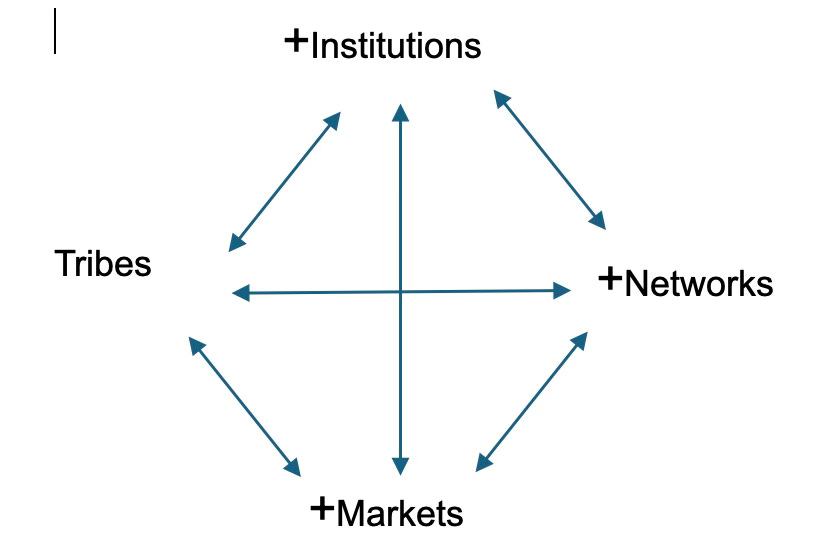
Figure 1. Possible Valence Vectors Inside TIME
As a dark-side example, consider the persistence of political and economic corruption around the world. Much of it stems from traditional clannish (T-type) practices penetrating government (+I) and business (+M) circles (Ronfeldt, 2017). Corruption creates affinities that can generate enormous inter-form stickiness. So can less-dark and bright-side forces and factors, like dynastic intermarriages, renewable government contracts with private corporations, Congressional lobbying by PR firms, advertising so people prefer one brand over another, etc. In a sense, China’s Belt and Road Initiative (BRI) is a gigantic stickiness-building operation across all six spans in Fig. 1. The U.S. Agency for International Development (USAID) used to be a vast stickiness-building program too, until it was shut down last year.
All sorts of entries could be listed for each of the six spans in Fig 1. And the list would surely change over time. My curiosity is whether stronger preferences may evolve between some forms more than others, and whether that too changes over time — and what differences that could make for understanding TIMN
Stickiness, affinity, valency, and avidity as scientific concepts
Stickiness and affinity were terms I turned to months ago in a post about preconditions that must exist before evolution of any kind can start up — variety and commotion were the others. Now here we are again. While I’ve learned that stickiness is not used much as a scientific term, affinity is — it’s defined in biochemistry as the degree to which a substance tends to combine with another. So it’s tempting to rely on it here.
But I see there’s another scientific term that may be appropriate: valence or valency — meaning the combining capability of an element. The term is from the Latin valentia (strength, capacity to bond) as well as valens (being strong, stout, robust, healthy) and valēre (be strong, have worth). German chemist Edward Frankland, using the German derivative valenz, brought valence into the sciences in 1852 to explain how atomic elements bond to form compounds. He found the bonding occurred between electrons in the outer shells of atoms, and that the number of bonds an atom can make depends on the number of electrons present in its outer shell (normally no more than eight). While matters get more complicated than that, the key point for me is that valence meant a surface(?) was available where electrons from different atoms could bond with each other, rather like a lock and key. Thus an element’s valence — its combining power, the number of bonds it can make with other elements — came to be expressed as a number in chemistry and physics. (And by the way, as an interesting aside, Saint Valentine and Valentine’s Day are named after the same Latin roots — Valentine’s Day is a kind of declared valency day.)
Maybe TIMN’s forms have different valences for each other? Maybe their valences change over time, depending on where a society is situated in the TIMN progression? Maybe valence — long a dynamic concept in geology, physics, chemistry, biology, and recently in psychology and linguistics — could help us understand societal evolution too?
While I’m going to emphasize valency to make my points, I better clarify that, in the hard sciences, affinity and valency are related but not the same. As one Google search put it, “Affinity is the strength of a single molecular bond …, while valency is the number of binding sites on a molecule.” Thus valence is expressed as a number. And since not all atomic elements can combine with each other, valence expresses the number of other elements that a particular element could lock onto and bond with, say to form a molecule — e.g., typically 2 for oxygen, 4 for carbon.
Moreover, I learn from my online search, affinity plus valency add up to avidity — “the total, combined strength of all those multiple single affinities working together, making it much stronger than any individual affinity.” In other words, “Think of it as: Affinity = Strength of one connection, Valency = Number of connections, Avidity = Total strength from all connections.”
After learning that from the hard sciences, I’m still sticking with valency alone for this post. If you prefer to think in terms of affinity, go ahead — I may eventually prefer it too. But avidity feels inapt as a term for studying societal evolution at this time.
As for the soft sciences, psychology and linguistics, they treat valence not as a number like physics and chemistry do, but as a spectrum along which emotional and other valences rank as positive or negative. Psychology also was the first field to use the term valence systems. According to a Google search, people’s minds give rise to positive and negative valence systems “for evaluating the world and deciding what to pursue and what to flee” — as a “way of assigning ‘good’ or ‘bad’ tags to things to guide adaptive actions.”
Maybe the interactions between TIMN’s forms and their realms result in positive and/or negative valences? That seems relevant to what I’m after — maybe it could add a qualitative aspect to my use of valence. But as I tried to incorporate this soft-science approach to treating valence as a spectrum, it felt more like a way to measure affinity than valence. Maybe I just don’t understand yet, but I end up setting it aside in favor of iterating the hard-science approach which treats valence as something that either exists or doesn’t. I do like the soft-science idea/observation that valence systems may exist.
A strong valency between Tribes and Networks?
Since several posts ago, I’ve wondered whether Tribes and Networks may have a positive valence toward each other within civil society — a valence and affinity that exceeds their valence and affinity for the other two forms and their realms, Institutions and Markets. The answer seems to be yes at present (but not necessarily all across history).
To recap, the Tribes form excels at maximizing people’s sense of group identity and belonging, family and community, recognition and acceptance — a person’s place and position in a close circle of care and cooperation, initially for security and survival amid the outside world, later for asserting one’s place and functioning alongside the outside world. In contrast, the Networks form excels at maximizing people’s outreach in order to expand connectivity, coordination, and collaboration with others for agreed purposes, beyond and apart from whether those others are deemed in-groups or out-groups from a Tribes standpoint. Tribes tend to stress narrowed identities; Networks, transcendent identities. Tribes tend to build like-to-like relations; Networks, like to-unlike relations. Tribes emphasize provenance; Networks pursue providence — as glib generalities.
Examples? MAGA seems a good Tribes-oriented example; so do motorcycle clubs. In contrast, Doctors Without Borders, Homeboy Industries (and its Global Homeboy Network), Rotary International, and Jose Andres’ World Central Kitchen seem good Networks-oriented examples.
But exactly how and where do these positive and negative valences show up? My eyes go to a set of issues that are central to Tribes and Networks dynamics these days: the back-and-forth among civil society actors over identity, immigration, refugee, citizenship, diversity-equity-inclusion (DEI), and related welfare and humanitarian-aid issues. These once-calm issues have become terribly polarizing, as Tribes of all sorts have organized around all sides. Such issues beg for resolution and transcendence, yet many may remain unsettled until a Networks-based realm can eventually emerge from civil society, resetting everything.
Valences and valence systems show up in three ways I’ve identified so far:
In narratives about who deserves access and connection to what: The issues I just mentioned — immigration etc. — involve a constant interplay between in-group and out-reach narratives, i.e. between pro-Tribes and pro-Networks stances that often arouse a range of racial, ethnic, religious, cultural, and other identitarian sensitivities. As a stereotype, rival narratives may pit red-neck conservatives against liberal do-gooder cosmopolitans — the former seeking exclusion, the latter inclusion. All sides become reactive as well as promotive, and their narratives become entangled (a kind of stickiness). The more they bend toward inclusion and acceptance, the more they signal a positive valency between Tribes and Networks actors.
In organizations that form, bond, and fight as allies around those narratives: Numerous CSOs, NGOs, and other voluntary organizations (even militias and gangs) have grown around the immigration etc. issues I listed above. So have news and opinion media that want in on the action. Local ordinances that result from citizen initiatives may be another manifestation of valency between the Tribes and Networks forms.
In documents that authorize rights to access and connection: Laws, codes, permits, licenses, cards, etc. that extend rights to people for everything from citizenship to club membership all mean a valence has been authorized.
Listing sticky narratives, intermediary entities, and authorizing documents provides a start to finding that valency (combining power) has grown between the Tribes and Networks forms within civil society. To be more scientific, I’d have to add more issue areas and examples, point out measures for specifying valences, map narrative and other interactions, and show that comparably more is currently going on between Tribes and Networks than between any other TIMN pair. Far too much to for me to imagine doing. But I feel I have enough material to persist with assuming it’s an hypothesis worth study — and to proceed to make more points.
Strong valency between Institutions and Markets too?
Which leads to asking where that leaves TIMN’s other two forms and their realms, Institutions (government) and Markets (capitalist economy). Could they too be said to have a sticky affinity or preferential valence? Stronger than either has for the other two forms, Tribes and Networks? Or for civil society as a realm?
I see evidence that’s currently so — again, in the build-up of narratives, organizations, and legal documentats that work to bind the Institutions and Markets forms/realms together. It seems evident in the symbiosis called the “military-industrial complex.” In the ways that policy frameworks, which included government, business, and civil society as options in the 1950s-1960s, now only emphasize government (the public sector) and business (the private sector) as options. And in the ways that leaders and other personnel often go back and forth between public- and private-sector jobs during their careers — the “revolving door” phenomenon.
But wait — “seems evident” is a far cry from “is clearly the case.” This valence concept keeps bugging me. If I follow recent usages in psychology and linguistics, seemingly any tendency (orientation, affectivity, affinity) toward something else indicates valency. That’s not as discriminating as the concept’s original usage in chemistry and physics, where atomic elements exhibited not a tendency but a certainty toward each other. I better ponder this some more.
GETTING VALENCE RIGHT — OR GOING TOO FAR?
As I read it, valency in the hard sciences is about the capacity of one entity to dock and bond physically with another entity, like a lock and key. It originally means attachment (connecting, binding, mooring, mating, fitting together) is possible, even a sure thing, if the right thing comes along. It means entities can unite and combine, selectively and conditionally. Back then valency wasn’t about variable degrees of wanting vs. fearing, pursuing vs. fleeing, etc., as the soft sciences currently treat it. No, it was about a docking point(?) that was open (or not) and a line that could or could not be crossed.
With my eye on the concept’s potential use for understanding societal evolution, I say it’s best to see valence as an entity’s yes-or-no capacity to dock and bond with another entity. More broadly, it’s about societal rights, rules, and regulations regarding what can (and cannot) dock and bond with what. A valency system, then, is a system of routes, rights, rules, and regulations governing entities’ powers to meet, attach, and combine. I think my new take on TIMN will work better if I adopt this traditional hard-science view of valency as a binary phenomenon — a condition that either does or doesn’t exist. Psychology’s approach to valence, which purports to measure in-between degrees and tendencies, now seems far more about affinity or avidity than valency. So I’m setting psychology’s approach aside for perhaps another day. But I do see fit to retain its idea/observation that valence systems exist.
Realizing valence and valency systems are prevalent all around us
Looking at today’s world with this tighter optic in mind, I see valency operating all around. It’s evident in society’s rights and wrongs, dos and don’ts, permissions and prohibitions. In travel visas, building permits, marriage and drivers licenses, even library cards. In job qualifications; and non-compete agreements. In eligibility requirements for joining local fraternities and clubs, as well as international military alliances and trade agreements. In designations of go and no-go zones. In electoral districting and city zoning laws. In laws approving corporate contributions to political campaigns. In approvals and denials of access to services and privileges. In criteria for who gets to cross a boundary, enter a door, pass through a gate, park and sit where. In beliefs about whether to accept another person’s gender, race, religion, and/or ethnicity. In recent moves to privatize national parks and other public lands. The list could go on for pages. Valency controls and their manipulation abound in all sorts of public and private dealings, even when parents tell children they’re grounded and can’t watch TV until their school homework’s done. .
Cultures, religions, ideologies, maybe complex system of all sorts, appear to have, and to depend on having, valence settings of one sort or another. Cultures and religions tend to be rife with valence settings and valency alignment systems, for example regarding who may marry whom and be accepted where. As for ideological isms and ocracies, democracy freely allows multivalent and polyvalent bonds, autocracy and monarchy not so much, feudalism even less. In this light, slavery is a bivalent system of extreme inequivalence where the master rules every bond. The Spanish Inquisition was about religious valency. The U.S. civil rights struggle in the 1960s was about racial valency. And what’s lately happening in the streets of Wisconsin is a valency battle over openness to immigrant rights. Valency warfare is becoming a thing in America.
Indeed, just about everything appears to have if not need some kind of valency setting. It indicates who is able to gain access and connect to something, and who may not. Which means I could simply write about access instead of valence — use plain english instead of scientific lingo. I see-sawed about that for a while. But the more I used and learned about the word valence, the more I realized it’s the way to go.
Or am I taking the word too far? Reading too much into its seeming possibilities? Wouldn’t it already be in prevalent use by now if it could mean all I’m supposing? I wonder. But I’m continuing anyway, in case valence really can be found and used as expansively as I’m detecting. And by the way, more about that adjective prevalent in a moment.
If I’d stuck with access or some other plain word, I would not have noticed the patterns I’m writing about. More importantly, using valence adds a scientific light to my efforts to find evolutionary principles in other fields that may apply to TIMN. Valence is already well-known for its significance in chemistry, physics, psychology, and linguistics. It’s about time it helped as well with theorizing about the nature of societies and their METs (major evolutionary transitions). Valency alignment and re-alignment processes may play far larger roles in social and cultural evolution than theorists have noticed so far. The same point may apply to evolutionary theorizing about our planet’s geosphere, biosphere, and emerging noosphere as a holistic system.
To my knowledge, no MET theorist has written a word about valency dynamics. Yet I bet they matter a lot during METs where a society’s complexity increases. If an MET involves the rise of a next/new TIMN form of organization, the ensuing processes of structural-functional differentiation are bound to result in valence-shifting as the new form absorbs actors and activities from the older forms/realms. Too much for me to explore and confirm right now, but here’s a marker for my claim, hoping others begin to think about it too. Might be important.
Realizing we already use words about -valence and could use more
Furthermore — a clincher for using the word valence instead of access or some other plain word — I’ve remembered that people already use three valence-related words all the time. Valence is not in common usage, but ambivalence, equivalence, and prevalence are. People often remark that they feel ambivalent about this or that. The word is from the Latin roots ambi- (both, on both sides) and valere (to be strong and worthy, as already discussed). While not originally a scientific term, ambivalence was brought into the sciences by Swiss psychologist Eugen Bleuler in 1910, drawing on the German derivative equivalenz to mean having simultaneously contradictory if not conflictive feelings or beliefs about something — seeing “strength on both sides,” being on the fence and pulled in opposite directions, even feeling wary of attachment, as in a love-hate relationship. I often feel ambivalent, but my initial ambivalence toward using the word valence is gone.
The etymology of equivalence should be obvious. But here’s an important point about prevalence and prevalent: they don’t merely mean something is widespread, as I’ve long thought. They stem originally from praevalēre (”to be very able” or “to have superior power”), which itself comes from prae- (”before”) and, once again, valere (”to have power, be strong”). In short, prevalence and prevalent initially meant something prevailed to the point of having a capability to rule. Modern usage has watered this out in favor of meaning little more than widespread acceptance. Also noteworthy is the word countervail, since its Latin roots contra and, again, valere mean “to be of worth against.” (Curiously, our word value is also rooted in valere.)
While researching these words, three adjectives occurred to me: invalent, provalent, and antivalent. However, I see they’ve not yet been coined for common usage (though invalent has appeared in old German theological debates, and lately in technical reports about sensor designs). All three sure look like they’d be useful:
— Invalent could mean lacking a capacity to connect and bond, or lacking in attachment and acceptance capacity. Imagine a political campaign where a party’s platform is failing to connect with people, or a leader whose ideas are falling flat. They could be said to be running invalent campaigns for support. Valency is all around us, but so is invalency. Sounds like a winner of a word to me.
— Provalent could mean being in favor of developing valency, being pro-social in a particular way, perhaps in favor of multivalency and/or polyvalency, two words already in use in the sciences and elsewhere. Maybe proto-valent would be a useful coinage too, say for meaning something is becoming more open and available for docking and bonding.
— Antivalent could apply to the state of many prejudiced, biased, and otherwise opposed mindsets. Their antivalence would mean they are closed, opposed, or even hostile to connection. Gosh, I can think of some goings-on that I’m feeling antivalent about right now.
ASIDES ABOUT DONALD TRUMP AND THE CONSERVATIVE’s ECOSYSTEM
Now that I’m playing around with this, looking for manifestations, I see a leader who inherently grasps all this better than any other, undoubtedly without ever having heard about valence: Donald Trump. I also see an ecosystem that’s been deliberately built for valency purposes, again I’d presume without ever having heard about valency: the U.S. conservative movement’s ideological “ecosystem.” A few points about each may help plant the words/concepts more properly in our minds, though it means wandering momentarily afield of TIMN.
President Donald Trump’s never-ending machinations to control who gains access to benefit from what keeps taking dark turns. In light of my new understanding, most everything he is doing — loyalty tests, tariff impositions, information restrictions, organizational creations, etc. — involves valency. His singular strategy/tactic is to attack and manipulate valency conditions; he is a master valency manipulator, no matter the issue. Much of his “transactionalism” amounts to valance mongering. And in keeping with his fixation on valency, he seeks to be prevalent in all matters; he dislikes displays of ambivalence and equivalence; and he loves to make others appear invalent. He appears to have valency conditions constantly on his mind. I’m waiting to see whether his newly-founded Board of Peace (BoP) becomes a clever Trojan-Horse operation for valency manipulations.
The construction of the American conservative movement’s political and ideological “ecosystem” — it’s called that, adopting a term from ecology — provides another instructive example of the importance of valency conditions in American society. Until the 1970s this movement was organizationally quite weak and disparate. The initiative — and blueprint — for building it into an aggressive well-integrated multi-prong system for advancing conservative interests throughout American society came from the 1971 “Powell Memo” written by Lewis F. Powell Jr. just before he joined the U.S. Supreme Court. He sent it as confidentially to the head of the U.S. Chamber of Commerce under the title “Attack on American Free Enterprise System” — arguing that capitalism was under excessive attack intellectually, politically, and culturally, and that conservatives needed to mount a vigorous systematic counter-attack. Leaked to the public in 1972, it quickly gained notoriety; today it is considered a founding document of the conservative movement. Follow-on impetus came from efforts by Paul Weyrich and other leading conservatives in the 1990s and beyond to build up the movements infrastructure by creating new think-tanks (notably, Heritage Foundation and Cato Institute) and advocacy groups.
By now, according to summations by Google AI that look accurate, the American political conservative movement has evolved from a disparate set of intellectual ideas in the mid-20th century into a highly organized, self-reinforcing network — an organizational ecosystem — of conservative think tanks, advocacy groups, law firms, media outlets, grassroots organizations, and philanthropic foundations that work together to develop, market, and implement conservative policies. The movement operates as a coordinated integrated system, enabling its ideas to flow quickly into political action and mass messaging across the ideological landscape. It seems made for waging “social netwar” (Arquilla & Ronfeldt, 1996, 2001).
As I see it, this conservative ideological ecosystem is deliberately designed so that every element is valenced to network regularly with every other, and so that new elements can be added with aplomb, their valences set in advance. That makes for a tight-knit “small-world network,” compared to what’s found on the liberal-democratic side of the spectrum. Yet its conservative elements are not entirely of one mind; there’s still room for diversity and variety within its parameters. At the same time, it’s also valenced to defend against networking with outsiders. Or so I gather, accurately I hope.
WRAPPING UP, MOVING ONWARD
Learning about valence and its usages across the sciences, see-sawing on whether it’s a big deal for TIMN, trying to figure out how and where it manifests in everyday life, etc. has been an ordeal. The pivotal moment came when I realized I better stick with hard-science’s original concept (where an element has a physical valence or it doesn’t) and set aside soft-science’s approach (which views valence more like an emotional affinity on a sliding scale). I’ve no way to know whether my decision is professionally legit, but research and writing for this post have eased since that pivot.
Here’s what I think I’ve accomplished:
Formulated a working definition of valence that suits TIMN: Valence means a capability (power strength, capacity, worthiness) to dock and bond with another entity — a capability to meet, connect, and combine with another entity. It’s a limited capability that depends on the condition of both entities. It means not just anyone or anything can come along and get to dock with any other. A valence must pre-exist or be developable for that to occur — as many a Happy Valentine’s Day card will wish a couple weeks from now.
Identified where to look for evidence that valency may manifest between two or more TIMN forms: I listed narratives, organizations, and laws as three places. That seems a sensible start, but only bare beginnings.
Noticed (and put markers down markers for) new hypotheses about valency’s roles in the long-range evolution of societies: TIMN needs work in this regard. So does MET theorizing more generally. Valency alignment and realignment processes also seem sure to figure in the rise of our planet’s noosphere, and in the rise of AI-empowered entities as its major denizens (like those AEONs I anticipate). Maybe all ecosystems contain valency alignment processes and systems.
Recognized valency manipulation as a divisive disruptive tactic (if not strategy) widely used by authoritarian leaders. One valency matter or another appears to lie at or near the core of all human conflicts these days.
Here’s what I fret I’ve not accomplished:
I haven’t proven that the Tribes and Network forms currently have a stronger valence for each other than for TIMN’s other forms, Institutions and Markets; not that those latter two forms currently have a preferential valence for each other too. I made a start at pointing out narratives, organizations, and laws that can help confirm the proposition, but I didn’t get far with them. ButI must turn next to laying out how axes and axial conflicts may figure in TIMN, so I’m just going to assume my valency proposition is correct and move on.
I also didn’t say as much as I’d hoped about valency alignments probably being quite different in earlier TIMN growth phases: first with a Tribes-Institutions alignment; then a Tribes-Markets alignment; now a Tribes-Networks alignment. But I see a way to squeeze this into my upcoming axis post.
Here are some marginal side-thoughts I’m left with:
Valency dynamics may be significant in the development of the noosphere. Maybe our planet’s geosphere, biosphere, and noosphere have, and are supposed to have, mutual valencies. Maybe those valencies are at now at risk. Maybe valency should be brought into planetary-science discussions.
Last year I wrote about the prospects for consilient coexistence in U.S.-China relations. Which meant I learned about the idea of consilience — synthesis and unification — across the sciences. Now I’m wondering whether consilience and valency may be related, whether prospects for consilience may depend on finding and/or creating valencies between different sciences.
A while ago, psychologist Michele Gelfand and colleagues identified significant “differences between cultures that are tight (have many strong norms and a low tolerance of deviant behavior) versus loose (have weak social norms and a high tolerance of deviant behavior” (Gelfand et al., 2011). Well, norms often take form as valency settings. Maybe it’d be interesting to review her tightness-looseness model from a valency perspective.
Finally, a new idea/observation has occurred to me that may prove interesting, maybe highly significant: It asks about valences that do not currently exist but may develop in the future — potential future valences that are currently suppressed. I’m referring to my TIMN deduction about a +Networks realm emerging from TIMN’s dynamics, specifically my deduction that it’ll be a pro-commons realm defined largely by health, education, welfare, and environmental (HEWE) actors and activities.
Government and corporate business actors currently have tight grips on all major HEWE matters, and their approaches keep these matters siloed from each other. It may be a step too far to claim they are deliberately preventing valencies from being noticed and developed among HEWE actors and activities — but that’s the outcome. I see occasional academic discussions that people’s health, education, welfare, and environmental conditions are interrelated — but only in passing and never to any programmatic avail. Moreover, every AI-related discussion I’ve seen addresses each HEWE matter separately, never asking whether AI could help frame and address them as a conjoint set that may merit holistic strategies and programs. I’m not sure what valencies (bonds) wait to be uncovered and developed across the HEWE set, but I’d speculate there are more than we presently know.
This doesn’t mean HEWE valencies have to be strong for a +N realm to emerge. As I recall from reading about the emergence of market (+M) systems, bygone aristocratic landowners and citified industrialists were initially indifferent if not antagonistic toward each other — they didn’t mix well. But over time, agriculture and industry became major sectors of market economies. It looks to me that leaders developed valences and allegiances not so much to each other as to the market system (+M) as a whole. I’m sensing a recurrent TIMN dynamic there that I’ve not fully surfaced and written up yet.
Today, assuming I’ve analyzed correctly, the prospects for +Networks to gain impetus reside mostly in the civil-society realm. Government and business are not going to loosen their grip, absent tremendous pressure. In a sense, government and business are using network (lower-case) designs of their own to prevent +Networks designs from arising to generate a new realm consisting of, say, HEWE-oriented equinets and exonets, as I discussed before. Massive valency realignments lie ahead that business actors will surely resist and oppose, but that will provide openings and opportunities for other actors. Or so I theorize … with hope.
ACKNOWLEDGEMENTS
I’ve never before used Google’s AI-empowered search results so much.
CODA: A LITTLE NIGHTCAP MUSIC
The agitation I’ve experienced while trying to understand and write about valency reminds me of a ferocious comic-relief rendition of an aria from Vivaldi’s opera Griselda (1735). According to Google’s AI Overview, “the Italian aria title ‘Agitate da due venti’ translates to ‘Agitated by Two Winds’ or ‘Tossed by Two Winds’. It conveys a state of being metaphorically torn, conflicted, or overwhelmed by two opposing forces or emotions, often describing a turbulent inner turmoil.”
Cecilia Bartoli – “Agitate da due venti” – 1998